
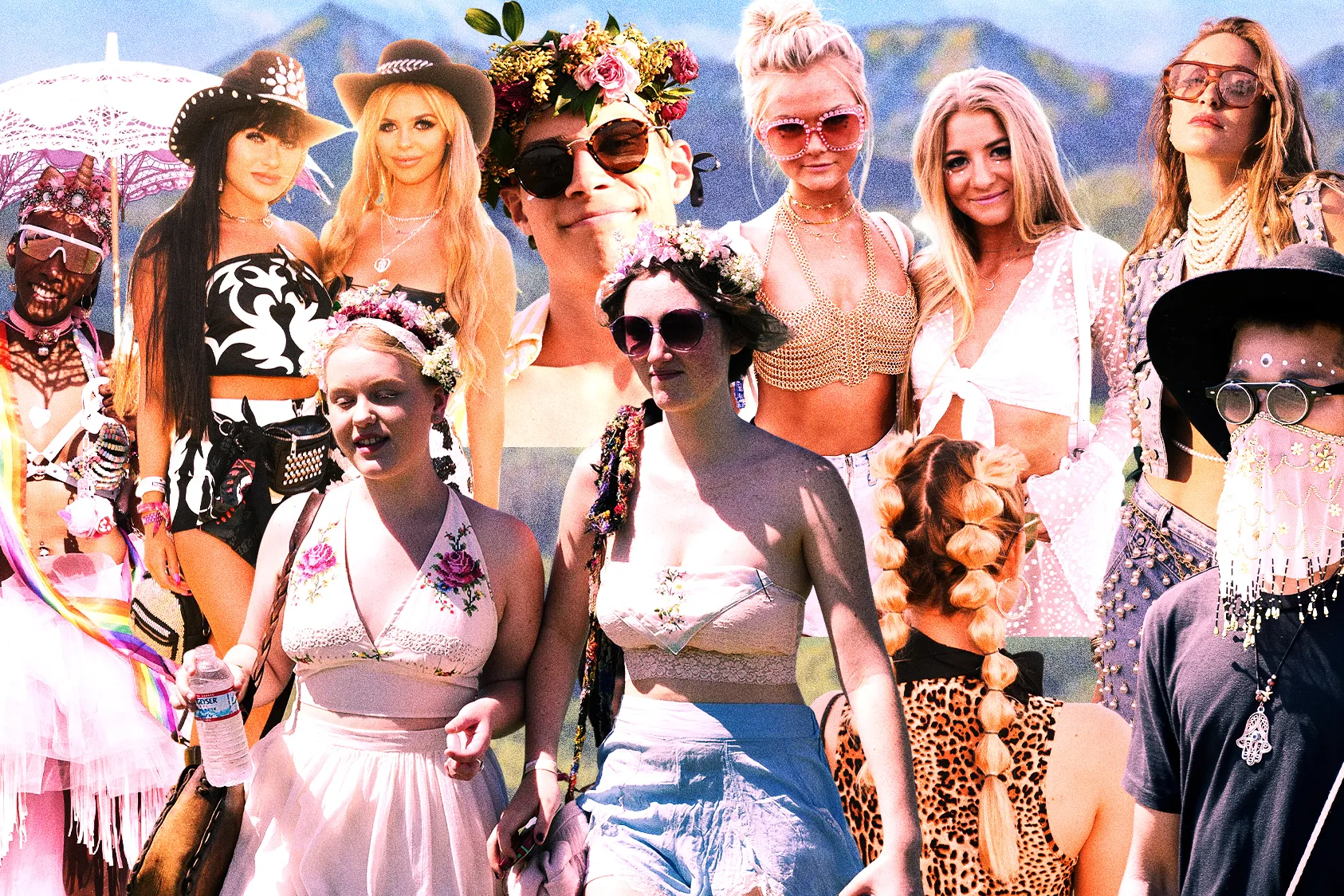
At the Coachella Valley Music and Arts Festival, fashion in 2026 continues to function less like a traditional runway extension and more like a live experiment in identity, visibility, and digital translation. Every outfit is not only worn—it is immediately interpreted, clipped, shared, and ranked in real time. Within that fast-moving visual ecosystem, clear patterns emerge around what feels elevated versus what gets dismissed as noise.
The strongest looks this year lean heavily into structure, intentional styling, and controlled visual language. These are outfits that feel considered from every angle—silhouettes that are balanced rather than overloaded, color stories that are deliberate rather than reactive, and accessories that serve a purpose instead of competing for attention. The overall impression is coherence. Nothing feels accidental, and nothing feels like it’s fighting for dominance within the look.
What defines this “best dressed” direction is restraint paired with clarity. Outfits are still expressive, but they are edited. There is a sense that each element has been chosen with intention, not accumulation. This creates a visual ease that translates well both in person and on camera. In a festival environment saturated with content creation, that kind of control stands out immediately. It reads cleanly in short-form clips and holds its shape across multiple angles, which is increasingly important in a digital-first fashion moment.
On the other end of the spectrum, the “worst dressed” category this year is less about individual failure and more about overload. Over-accessorized styling, chaotic layering, and overly referential festival clichés tend to collapse under their own weight. When too many visual ideas compete at once—too many textures, too many accessories, too many aesthetic signals—the result becomes fragmented rather than expressive. Instead of communicating identity, the look gets lost in excess.
This tension reflects a broader shift in festival fashion culture. The era of maximalist expression is not gone, but it is being filtered through a more critical lens. Audiences are more visually literate than ever, and social platforms reward readability. A strong look now needs to communicate instantly, not gradually. If it takes too long to decode, it risks being ignored or reduced to noise.
The “best dressed” category benefits from this environment because structured styling translates efficiently. Clean silhouettes, intentional focal points, and disciplined accessorizing create looks that are easy to process and hard to misinterpret. They align with how content is consumed today: quickly, repeatedly, and often in fragments.
Meanwhile, chaotic styling often struggles not because it lacks creativity, but because it lacks hierarchy. Without a clear visual anchor, attention disperses across too many competing details. In a setting where every outfit is effectively competing for digital visibility, that dispersion becomes a disadvantage.
Ultimately, Coachella fashion in 2026 reflects a broader cultural recalibration. Expression is still central, but execution matters more than volume. The most successful looks are not the loudest—they are the most controlled. And in a space where everything is being watched, recorded, and reinterpreted instantly, control has become the new form of impact.
Leave a Reply