
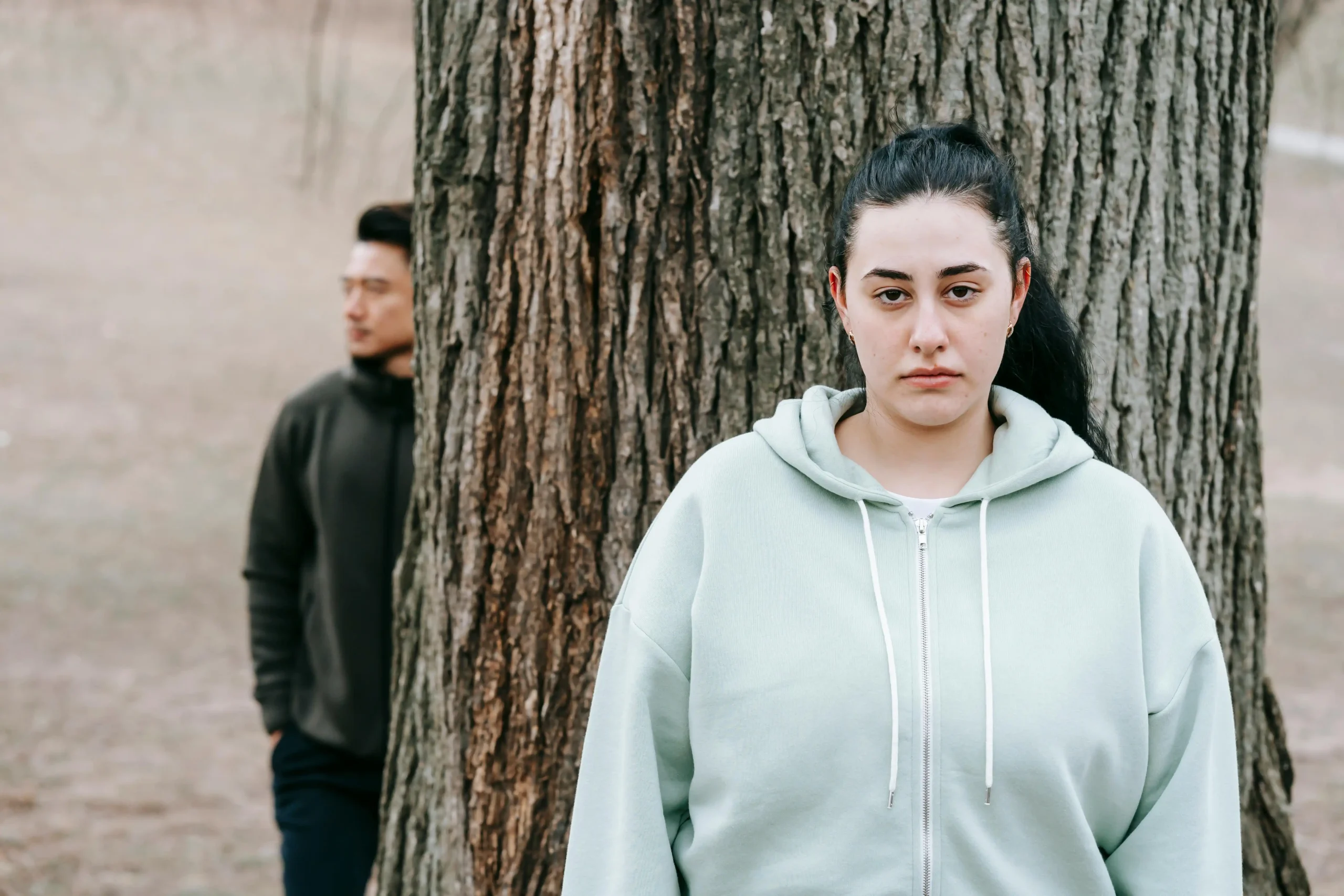
There are breakups that don’t just end a relationship—they quietly dismantle the way a person sees themselves. For Mia, it wasn’t just about losing a boyfriend. It was about slowly losing confidence, identity, and comfort in her own skin while still inside the relationship. And then rebuilding everything from zero after it ended.
When Mia first met Carlo, she was not someone who questioned her worth. She wasn’t obsessed with mirrors or comparing herself to other women. She was simple in the way she loved—open, trusting, and emotionally present. She believed love was supposed to feel safe, not measured. Carlo, in the beginning, reinforced that belief. He was attentive, affectionate, and made her feel like she didn’t need to change anything about herself to be loved.
But relationships don’t always stay the same as they start. And sometimes, the shift is so gradual you don’t notice it until you’re already inside a completely different emotional reality.
It started with small comments that seemed harmless at first.
“You’d look even better if you were more fit.” “Maybe we should start working out together, it’ll be good for you.” “I’m just being honest, I want what’s best for you.”
Mia didn’t take offense at the beginning. She even laughed some of it off, thinking it was normal couple talk or motivation disguised as concern. But over time, the tone changed. The frequency increased. The comments stopped feeling like suggestions and started feeling like evaluations.
Carlo began comparing her subtly to other women. He would not directly insult her, but he would highlight women who were “disciplined,” “consistent,” or “more put together.” He would scroll on his phone and pause longer than necessary on fitness influencers or women he found attractive. He never explicitly said she wasn’t enough, but he didn’t have to. The emotional message was already forming in Mia’s mind without him finishing the sentence.
Slowly, Mia started changing—not because she wanted to, but because she felt like she had to.
She became more conscious of her appearance. She started avoiding photos. She began choosing clothes that hid her body more. She hesitated in social situations, especially when she thought she might be compared to someone else. And without realizing it, she started viewing herself through Carlo’s expectations instead of her own perception.
The relationship slowly stopped feeling like love and started feeling like evaluation.
Mia didn’t notice the full extent of it until one night when she caught herself standing in front of the mirror for too long, analyzing parts of herself she never used to think about. That was the moment she realized something uncomfortable. She was no longer seeing herself as she was. She was seeing herself as someone trying to meet standards that kept shifting.
And still, she stayed.
Not because she was happy, but because she believed love required patience, understanding, and effort.
But effort should not feel like shrinking yourself.
The breakup happened quietly, without betrayal or dramatic confrontation. It wasn’t the kind of ending people imagine when they think of heartbreak stories. It was calmer, more final in a subtle way.
One evening, Carlo sat across from Mia and said, “I think we want different things now.”
Mia understood what he meant even if he didn’t say it directly. It wasn’t about different goals in life. It was about him wanting someone who fit a different image he had in mind.
She looked at him for a long moment. There was no argument in her mind anymore. No desire to fix what was already breaking. She simply nodded and said, “Okay.”
And just like that, it ended.
But what came after was far heavier than the breakup itself.
At first, Mia didn’t process it as freedom. She processed it as failure. She replayed everything in her mind, trying to identify where she became “less” in his eyes. She avoided mirrors for days. She became quiet, withdrawn, and emotionally heavy. She questioned her attractiveness, her habits, even her personality.
She started thinking that maybe Carlo had been right about everything.
That thought scared her more than the breakup.
Because it meant she had already started believing someone else’s perception of her over her own.
Weeks passed in emotional fog. She would wake up and feel unmotivated. She stopped taking care of herself properly—not because she didn’t care, but because she didn’t feel worthy of care. That is often the hidden impact of emotional rejection. It doesn’t just hurt feelings. It reshapes behavior.
Then one night, something shifted.
Mia was scrolling through old photos from before her relationship changed her mindset. She saw herself smiling without hesitation, wearing clothes she liked, standing confidently without overthinking how she looked. That version of her felt distant but familiar.
And she realized something important.
She hadn’t always felt like this.
Someone had taught her to feel inadequate.
And she decided she wasn’t going to stay in that version of herself anymore.
The next morning, she went for a walk. It wasn’t intense or structured. It wasn’t a transformation plan. It was just movement. But it was the first time she did something for herself without thinking about how someone else would judge it.
The next day, she did it again.
Then again.
Slowly, walking turned into jogging. Jogging turned into structured workouts she followed from free online videos. At first, it felt uncomfortable. Her body resisted. Her mind told her to stop. There were days she skipped. Days she cried. Days she felt like nothing was changing.
But she kept going anyway.
Because this time, it wasn’t about becoming someone else.
It was about returning to herself.
She started learning more about nutrition, not as punishment but as care. She drank more water. She improved her sleep schedule. She became more intentional about how she spent her time. She stopped obsessively checking how she looked in mirrors and started focusing on how she felt inside her body instead.
And slowly, things began to change.
Not instantly. Not dramatically. But consistently.
Her body became stronger. More toned. More energetic. But more importantly, her mindset began shifting. She stopped asking herself if she was enough for someone else and started asking if her life felt good to her.
That shift changed everything.
Her confidence didn’t come from sudden physical transformation. It came from discipline. From consistency. From choosing herself repeatedly even on days she didn’t feel motivated.
She started walking differently. Speaking more clearly. Laughing more naturally. She stopped shrinking herself in conversations. She stopped apologizing for existing in spaces. She started occupying her life again instead of observing it from the background.
People noticed the change before she even spoke about it. Friends told her she looked different. Healthier. Happier. Stronger. But what they were really noticing wasn’t just her appearance—it was her energy.
Because confidence is not just physical. It is behavioral.
Months passed. Then a year.
Mia didn’t become a completely different person. She became a more complete version of herself. The parts of her that had been suppressed during the relationship slowly came back to life.
Then came the moment she didn’t expect.
She saw Carlo again at a casual gathering.
At first, he didn’t recognize her immediately. And when he did, his reaction was subtle but clear. Surprise. Confusion. And something else he didn’t say out loud.
Because the woman standing in front of him was not the same person he had left behind.
She was not smaller emotionally or physically. She wasn’t trying to earn attention. She wasn’t seeking validation. She simply existed with calm confidence.
“You look different,” he said.
Mia smiled slightly and replied, “I am different.”
That was the end of the conversation.
There was no anger. No revenge. No desire to prove anything. Because she no longer needed him to confirm her worth or transformation.
As she walked away from that moment, she didn’t feel like she had won anything over him. She didn’t feel superior. She didn’t feel like she had finally “leveled up” for someone’s approval.
She felt peaceful.
And that was the real glow-up.
Not the body transformation. Not the external validation. But the internal shift from self-doubt to self-ownership.
Because the truth is, glow-ups are not about becoming someone new. They are about becoming someone who no longer abandons themselves for approval.
Mia didn’t become unrecognizable to impress her ex.
She became unrecognizable to the version of herself that once believed she wasn’t enough.
And that is the kind of transformation no breakup can ever take away again.
Leave a Reply