
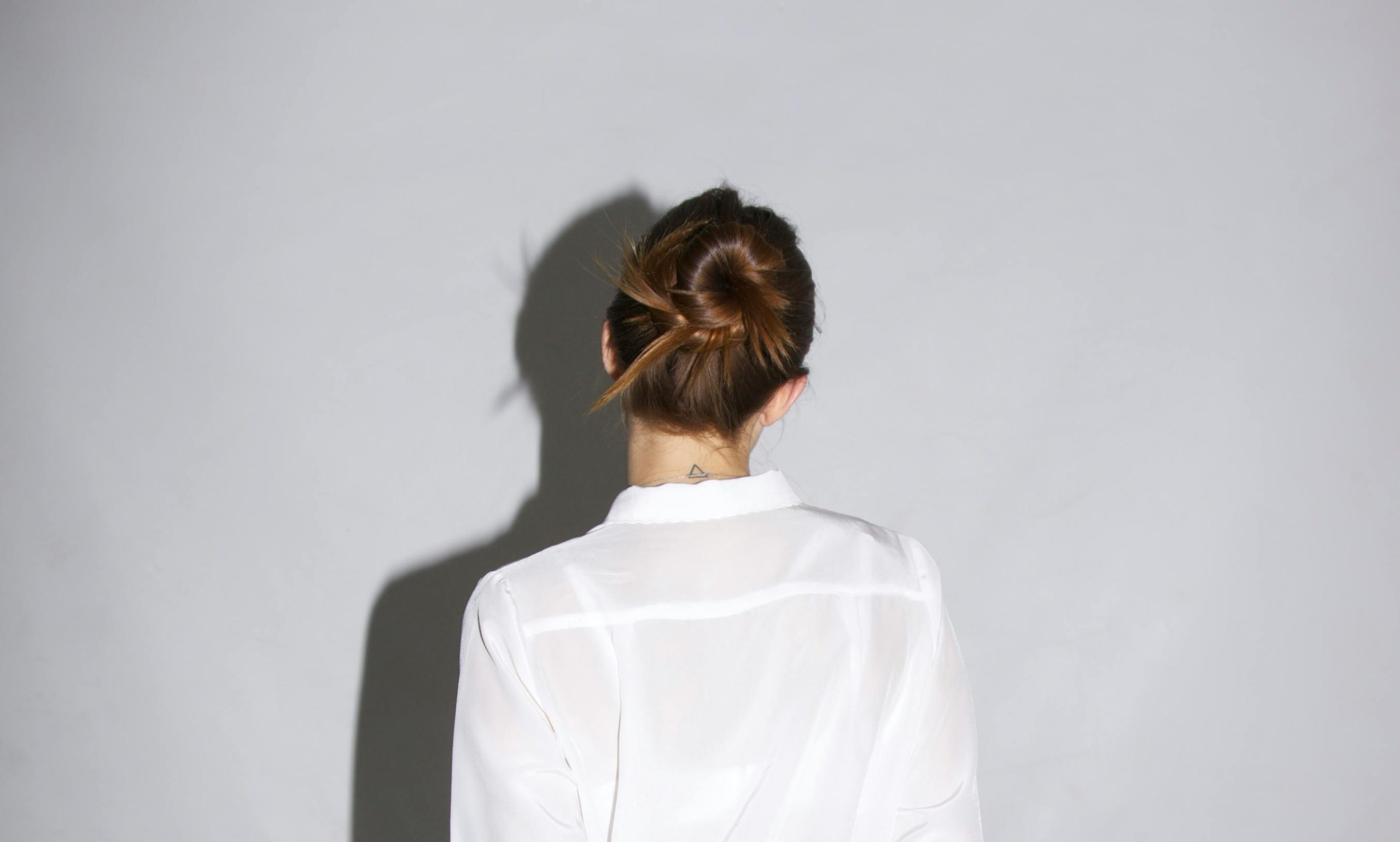
For nearly half a decade, the clean girl aesthetic functioned as a visual shorthand for modern aspiration. Dewy skin, slicked-back hair, neutral palettes, barely-there makeup, and an almost clinical minimalism became synonymous with discipline, wellness, and quiet luxury. It was an aesthetic that promised control in an era defined by chaos, a curated calm that felt attainable and respectable in equal measure. But as 2026 approaches, the cultural temperature has shifted. What once felt refined now feels restrictive. What once read as effortless now reads as effort disguised as virtue. The clean girl era is not ending because it failed—it’s ending because culture has outgrown it.
The first cracks appeared not on runways, but in everyday language. “Clean” began to feel coded. It suggested not just simplicity, but moral superiority—an implication that restraint equaled worth, that visibility should be earned through palatability. As more voices questioned who the clean girl aesthetic actually served, its limitations became harder to ignore. The look, while marketed as universal, quietly centered a narrow standard of beauty: slim, symmetrical, unblemished, neutral-toned. It rewarded those who already fit within conventional frameworks while asking everyone else to edit themselves into acceptability. By 2026, that editing feels outdated.
Cultural cycles always respond to pressure, and the pressure on self-expression has been building. After years of algorithm-driven sameness, people are tired of being legible to machines. The clean girl aesthetic thrived on predictability—it photographed well, optimized easily, and fit neatly into content formats that rewarded repetition. But optimization has a cost. It flattens identity. It trains people to present the most socially approved version of themselves rather than the most honest one. The bold upgrade emerging in 2026 is a rejection of that flattening. It’s not a return to chaos for chaos’s sake, but a recalibration toward individuality, texture, and emotional truth.
This shift is visible first in beauty. Skin is no longer required to look untouched; it’s allowed to look intentional. Makeup is reintroducing contrast—graphic liners, saturated lips, deliberate blush placement that reads expressive rather than corrective. Hair is moving away from hyper-polished slickness toward volume, irregularity, and styles that acknowledge movement and mood. The goal is no longer to look “naturally perfect,” but to look like you chose something. Choice, in 2026, is the new luxury.
Fashion is following suit, trading quiet uniformity for statement-driven silhouettes. The clean girl wardrobe—ribbed tanks, tailored trousers, monochrome sets—was designed to disappear into versatility. The bold upgrade insists on presence. Texture, asymmetry, metallics, exaggerated proportions, and visible construction details are returning not as trends, but as declarations. Clothing is no longer pretending to be invisible. It’s participating in the conversation. This isn’t maximalism as excess; it’s maximalism as authorship. People want their outfits to say something specific, not just something safe.
What’s important to understand is that this shift isn’t about rebellion against minimalism itself. Minimalism still has a place, but it’s no longer positioned as the most evolved or enlightened choice. The problem was never simplicity—it was the moral hierarchy attached to it. The clean girl aesthetic became aspirational not because it was beautiful, but because it was framed as “better”: cleaner eating, cleaner living, cleaner looking. By 2026, that hierarchy feels suspicious. People are questioning why messiness was coded as failure, why visibility had to be sanitized to be respected.
Social media plays a complicated role in this evolution. Platforms that once rewarded sameness are now saturated with it. When everyone looks “effortlessly put together,” the look loses meaning. Boldness, once risky, becomes the only way to stand out. But the new boldness isn’t just visual—it’s conceptual. It’s about reclaiming narrative control. Creators are less interested in being universally likable and more interested in being distinctly recognizable. The algorithm may still favor familiarity, but audiences are craving specificity.
There’s also a deeper emotional layer to this aesthetic shift. The clean girl era coincided with a period of collective anxiety—pandemics, economic instability, political tension. Cleanliness, order, and restraint offered psychological comfort. But as the world enters another phase of uncertainty, the response has changed. Instead of seeking control through suppression, people are seeking resilience through expression. The bold upgrade reflects a desire to feel alive rather than merely composed. It’s about energy, not perfection.
In wellness culture, this transformation is especially pronounced. The clean girl aesthetic aligned itself with a very particular version of health—thin, calm, disciplined, quietly glowing. But wellness conversations in 2026 are expanding to include mental health, neurodivergence, burnout, and emotional complexity. Aesthetic neutrality no longer signals balance; sometimes it signals avoidance. The new visual language of wellness allows for contradiction. You can be healthy and loud, grounded and expressive, regulated and visibly emotional. The body is no longer a project to be perfected; it’s a site of experience.
This reorientation also intersects with politics, whether consciously or not. Aesthetic choices have always carried social meaning, and the move away from clean girl minimalism reflects broader resistance to homogenization. When systems encourage conformity—whether through beauty standards, workplace norms, or digital platforms—style becomes a form of soft dissent. Choosing boldness is a way of refusing erasure. It’s a way of saying, “I exist beyond your template.” In that sense, the bold upgrade isn’t just a trend; it’s a cultural response.
Runways for 2026 reflect this clearly. Designers are embracing contradiction—pairing softness with severity, nostalgia with futurism, elegance with provocation. There’s a renewed interest in craftsmanship that shows its labor rather than hiding it. Seams are visible. Materials clash. Color stories feel emotional rather than seasonal. These choices mirror a broader desire for transparency. People are tired of surfaces that pretend nothing is happening underneath.
The abandonment of the clean girl aesthetic is also generational. Younger consumers, especially Gen Z and Gen Alpha, are less invested in blending in. They grew up watching trends cycle at unprecedented speed, aware that today’s ideal becomes tomorrow’s cliché. For them, authenticity isn’t about minimalism; it’s about alignment. Does your appearance match your inner world? Does it reflect your values, your humor, your contradictions? If not, what’s the point?
Even luxury brands are adapting. The old markers of refinement—quiet logos, neutral palettes, discretion—are being reinterpreted. Luxury in 2026 is less about invisibility and more about intention. A bold piece doesn’t cheapen an image; it sharpens it. Confidence replaces restraint as the ultimate signal of taste. The person wearing the clothes matters more than the clothes themselves, and the clothes are allowed to amplify that presence.
Critically, this shift doesn’t demand constant performance. Boldness isn’t about being “on” all the time. It’s about permission. Permission to wear red lipstick on a Tuesday. Permission to mix metals, patterns, references. Permission to be inconsistent. The clean girl aesthetic demanded coherence—your look, your lifestyle, your content all had to align seamlessly. The bold upgrade allows fragmentation. You can be many things at once, and your aesthetic can reflect that.
As 2026 unfolds, the cultural mood favors depth over polish. People are drawn to stories, textures, imperfections that signal humanity rather than branding. The abandonment of the clean girl aesthetic marks a collective exhale. It’s the realization that aspiration doesn’t have to look sterile to be meaningful. Beauty doesn’t have to be quiet to be taken seriously. And self-expression doesn’t have to be filtered through respectability to be valid.
In the end, the bold upgrade isn’t about rejecting cleanliness or simplicity outright. It’s about refusing to let them define worth. It’s about moving from aesthetic obedience to aesthetic agency. The clean girl aesthetic taught a generation how to curate. The era that follows is teaching them how to create.
2026 isn’t asking people to be louder for the sake of noise. It’s asking them to be clearer about who they are. And clarity, it turns out, can be beautifully bold.
Leave a Reply