
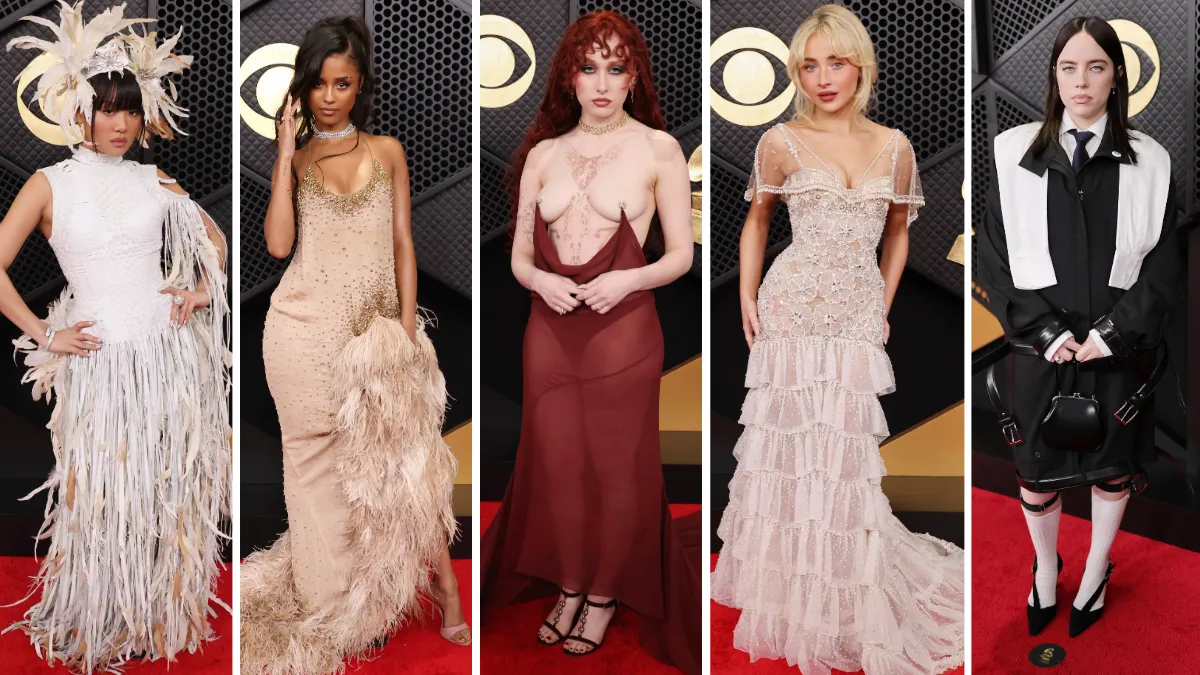
Every Grammys red carpet delivers unforgettable fashion moments, and not all of them are for the right reasons. While some stars mastered balance and individuality, others fell into the trap of overdone trends and missed opportunities. These looks became cautionary tales—reminders that bold fashion without clarity can quickly go wrong.
One of the biggest issues this year was trend overload. Several outfits attempted to combine multiple fashion movements at once—maximalism, nostalgia, avant-garde silhouettes, and high-shine embellishments—without a unifying vision. Instead of reading as daring or artistic, these looks felt chaotic. When too many ideas compete for attention, the wearer disappears behind the outfit, and the fashion loses its impact.
Another recurring misstep was confusing drama with design. Exaggerated proportions, heavy layering, and theatrical elements can be powerful when executed with intention. However, some looks crossed into costume territory, lacking refinement or a clear point of view. Fashion critics were quick to note that drama only works when it’s grounded in structure and confidence.
Fabric choices also played a role in several fashion misses. Shiny, overly textured, or clashing materials created visual noise rather than interest. Instead of enhancing the silhouette, these fabrics often distorted it, making the overall look feel unpolished. In high-profile settings like the Grammys, material quality and fit are just as important as concept.
Styling miscalculations further amplified these issues. Accessories were often piled on rather than curated, turning potential statement pieces into distractions. Hair and makeup sometimes competed with already busy outfits, adding another layer of confusion. The result was a lack of cohesion—each element fighting for attention instead of working together.
Perhaps the biggest missed opportunity was ignoring personal identity. Some outfits felt disconnected from the celebrity wearing them, as if they were chosen to chase viral moments rather than reflect individual style. The internet quickly spotted this disconnect, and those looks faded fast, remembered more for their awkwardness than their creativity.
Social media, as always, acted as the final judge. Side-by-side comparisons, memes, and instant critiques spread rapidly, reinforcing which looks missed the mark. In an era where fashion lives far beyond the red carpet, these missteps serve as valuable lessons for future appearances.
Ultimately, the Grammys worst-dressed list isn’t about shaming—it’s about learning. Fashion works best when it’s edited, intentional, and authentic. This year’s misses remind us that more isn’t always better, trends need context, and personal style should always lead the conversation.
Leave a Reply