
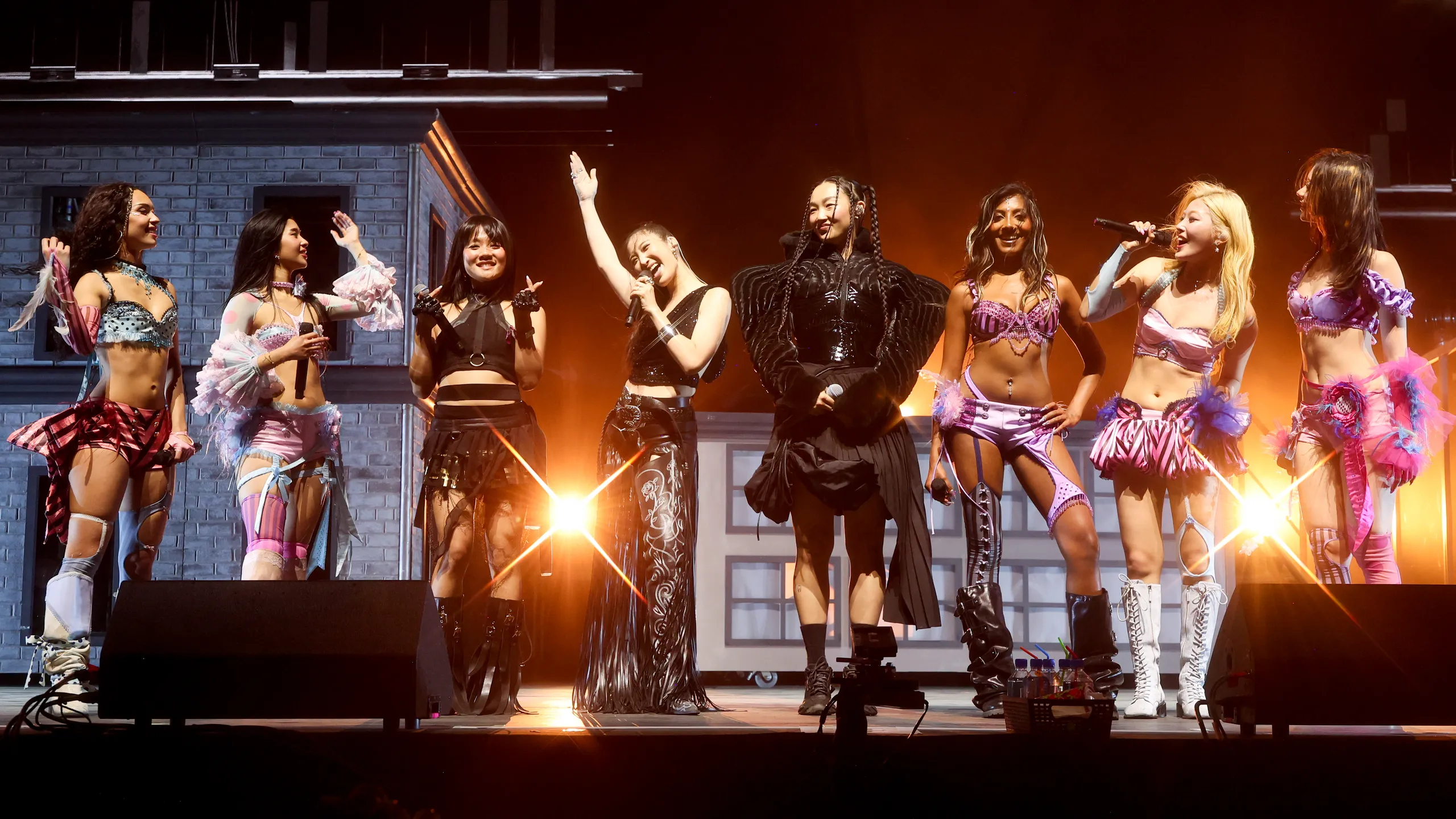
At the Coachella Valley Music and Arts Festival, fashion in 2026 makes one thing clear: the era of maximal chaos dressing is fading, and a more controlled, intentional aesthetic is taking over. This year’s style conversation splits cleanly into two categories—structured minimalism that feels curated and wearable, and overstimulated looks that lean too heavily into trend stacking and visual overload.
What stands out most is how deliberate the “best dressed” direction has become. Across performers and attendees alike, structured silhouettes, minimal color palettes, and intentional styling choices dominate the most widely shared looks. Instead of trying to compete with the environment, these outfits feel designed to move through it with clarity.
Best Dressed: Structure, Minimalism, and Control
One of the most talked-about style presences this year is Sabrina Carpenter, whose polished, cohesive styling reinforces the broader trend toward clean, performance-ready aesthetics. Her looks lean into defined silhouettes, subtle sparkle, and controlled glamour—pieces that read clearly both on stage and in short-form clips. The appeal isn’t excess; it’s precision.
Similarly, Karol G continues to anchor her visual identity in bold but structured styling. Her festival looks balance strong color storytelling with clean tailoring, avoiding clutter while still maintaining impact. The result is a presence that feels intentional from every angle, especially in motion-heavy environments like live sets and crowd shots.
Among the broader fashion crowd, “best dressed” attendees tend to follow the same formula: fitted pieces, breathable fabrics, and a single focal point per outfit. Whether it’s a sculptural silhouette, a controlled monochrome palette, or a standout accessory, the strongest looks avoid competition between elements. Instead, everything serves one clear visual idea.
Even understated beauty choices reinforce this shift. Skin-focused makeup, soft glam, and natural textures support the clothing rather than overpower it. The overall impression is coherence—nothing feels accidental or overbuilt.
Worst Dressed: Over-Accessing the Moment
On the other side, the “worst dressed” category is less about individual failure and more about visual overload. The most criticized looks tend to fall into a similar pattern: too many competing trends layered at once. Fringe, metallics, heavy accessories, neon accents, and multiple aesthetic references collide in ways that dilute rather than define.
In this category, some celebrity-adjacent appearances—such as heavily styled influencer fits and experimental streetwear combinations—draw attention for the wrong reasons. The issue isn’t creativity, but lack of focus. When too many ideas are stacked into a single outfit, the result becomes fragmented, especially under festival conditions where movement and distance already reduce visual clarity.
Outfits that rely on cliché “festival maximalism” also struggle this year. Overused tropes—feather-heavy styling, excessive layering, and heavily themed costumes—feel disconnected from the current shift toward wearable design. Instead of enhancing presence, they often compete with it, making the overall look harder to read in both live settings and digital clips.
The Shift: From Expression to Intention
What defines Coachella 2026 fashion overall is not a rejection of creativity, but a rebalancing of it. Expression is still central, but it is filtered through structure. The most successful looks don’t try to do everything—they choose one idea and execute it clearly.
This shift reflects how fashion is now consumed. With platforms prioritizing short-form video, outfits are no longer experienced statically—they are seen in motion, in fragments, and often out of context. Structured minimalism translates better in this environment because it survives compression. It remains readable even when reduced to a few seconds of footage.
Final Takeaway
“Best & Worst of Coachella 2026” ultimately shows a clear cultural pivot. The best looks are not the loudest—they are the most intentional. Structured, minimal styling dominates because it aligns with how attention now works: fast, fragmented, and visually selective.
Meanwhile, chaotic, trend-heavy outfits reveal the limits of over-design in a space that rewards clarity. In a festival environment where everything competes for attention, the most powerful style choice in 2026 is not excess—it’s control.
Leave a Reply